When people walk into a cigar retailer for the first time, the humidor is doing more talking than any staff member will. It tells a customer in about four seconds whether this is a place that takes the category seriously—or one that’s coasting on inventory somebody lost interest in years ago. At Industrial Cigar Co., we’ve come to treat the humidor less like a storage room and more like a system, one with the same rigor we apply to the rest of the business. A few principles have made the biggest difference.
The right product mix isn’t a buyer’s opinion—it’s a committee decision. The instinct in this business is for one person, usually the owner or buyer, to curate the humidor around their own palate and call it “the store’s selection.” We’ve moved away from that. At ICC, product mix decisions go through a blind evaluation process: we strip the bands and labels off candidate cigars, number them, and run them through multi-day tasting committees made up of our own members—the actual people who buy and talk about what’s on our shelves. It removes brand bias and ego from the decision and replaces it with the honest reaction of the customer holding the cigar. The result is a humidor that reflects what our membership actually wants, not what we assumed they’d want, and it gives members real ownership over the selection they’re shopping from.
Product depth should be a budget, not a guess. The instinct in this business is to buy what you love and hope the customer loves it too. That works for a while, and then your shelves become a museum of slow-moving inventory, and eventually you are forced to clear slow movers on a table in the front lobby. The result is that customers who see a deep-discount table when they walk in learn to expect lower prices. Instead, we manage purchasing against an open-to-buy model tied to actual sell-through data rather than gut feel—which forces a real conversation about depth versus breadth. Better to run six vendors deep on your core sellers than sixty boxes wide on things that sit. Depth builds trust with your regulars; breadth without velocity just ties up cash.
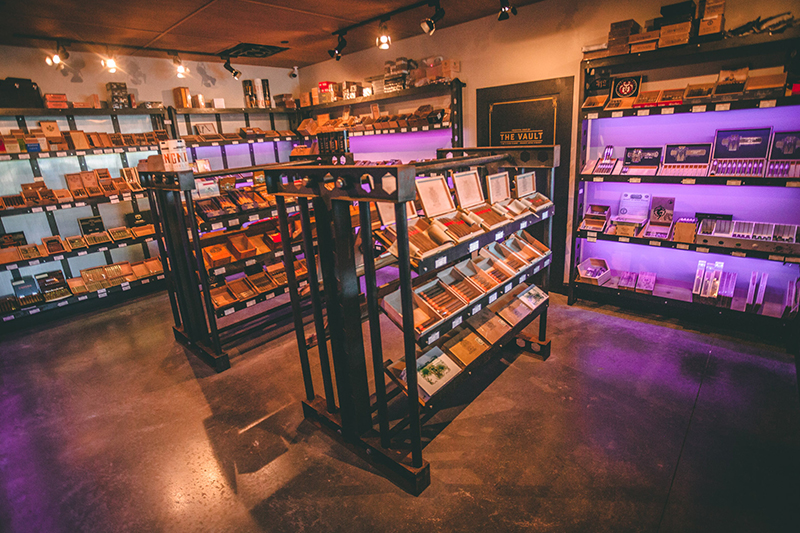
Merchandising and lighting are where retail discipline meets romance. A humidor should reward slow browsing. Group by strength or origin rather than by brand alone, because most walk-in customers are shopping a mood or a palate, not a manufacturer. Lighting matters more than most retailers give it credit for—warm, directional light on the boxes themselves (not just ambient overhead) makes bands and wrappers look the way they’re supposed to look, and it signals that someone cared enough to light the product intentionally.
Pricing visibility is a trust signal, full stop. Nothing undercuts a humidor experience faster than a customer having to ask, or worse, guess. Clear, consistent pricing—visible without a staff member’s help—respects the customer’s time and telegraphs confidence in what you’re charging. If your prices need explaining every time, that’s usually a merchandising problem, not a training problem. Have membership pricing? Be sure to show both member and nonmember prices on the tags so customers will ask about membership themselves.
Presentation is the sum of small decisions, made consistently. None of this requires a massive humidor or a big budget. It requires deciding what your standard is—for curation, for depth, for how a shelf gets faced—and then building the habits and simple systems that make hitting that standard the path of least resistance for your team, not something that depends on who’s working that day.
The humidor is the one place on the floor where product, environment, and hospitality all show up in the same four square feet. Getting it right isn’t about spending more. It’s about being deliberate.
– Article by Nathan Frakes, a tobacconist at Industrial Cigar Co.
This story first appeared in the 2026 PCA Annual. To receive a copy of this magazine, you must be a current PCA member. Join or renew today.