
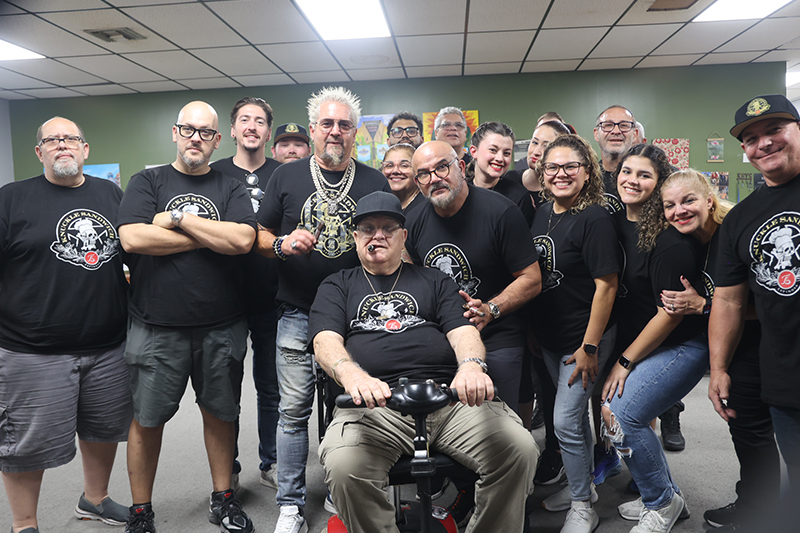
In an industry where many brands chase broader appeal to protect shelf space, Espinosa Cigars offers a counterexample worth studying. Since launching the company in 2012, Erik Espinosa has built dependable retail performance by narrowing his audience on purpose, creating a brand that functions less as a gateway product and more as a destination for cigar fans who already know what they want.
The strategy has proven sustainable. With more than four million cigars produced annually in Nicaragua, and strategic partnerships with manufacturers including AJ Fernandez, Espinosa has climbed from boutique upstart to mid-sized manufacturer without diluting the bold, full-flavored identity that first attracted retailers and consumers. For shops managing limited humidor space and fighting for consumer attention, the Espinosa approach offers practical lessons in how brand clarity can simplify the sales ecosystem.
The Business Case for Bold
Erik Espinosa doesn’t apologize for what his cigars are, or who they’re for. When discussing his company’s positioning, he’s direct about the strategic decision behind featuring predominantly bolder, more assertive blends. His reasoning is rooted in market observation rather than personal preference alone.

“Nobody talks about the greatest mild cigar they ever smoked,” Espinosa explains, noting the lack of social media buzz around lighter profiles. “People talk about cigars with flavor, cigars that are bolder. In order to get out there and to be more known, I had to make stronger cigars.”
This wasn’t simply about chasing trends. It was about understanding where conversation happens and leveraging it for brand recognition. While acknowledging that mild cigars represent significant volume in the U.S. market, Espinosa recognized early that those sales gravitationally pull toward established heritage brands with decades of consumer trust. As a newer manufacturer competing for retail space, he needed differentiation, not imitation.
The decision has downstream effects at the point of sale. For retailers, Espinosa cigars function as a sorting tool, helping sales staff quickly identify customers who prefer fuller-flavored experiences. This reduces friction in the humidor and shortens the sales conversation, an underappreciated factor in sell-through velocity.
Hector Alfonso, who handles blending responsibilities for the company, reinforces this intentional approach. When developing new products, the team starts by examining portfolio gaps and emerging industry trends, then experiments with tobacco combinations that stay true to brand identity while offering something fresh. The goal, as Alfonso describes it, is creating blends that feel familiar in quality but new in experience.
Building on Relationships, Not Just Products
Espinosa’s retail success traces back to a career spent building relationships across the industry. His early interest in premium cigars was shaped at home, influenced by his late father, Orlando Manuel Espinosa, who passed away on February 19, 2026, and almost always had a cigar in his mouth. Before launching his own brand, Erik worked as an independent broker representing companies including Drew Estate, Rocky Patel and Alec Bradley throughout the 1990s and early 2000s. He then partnered with Eddie Ortega to form EO Brands, which produced the highly rated 601 line, Murcielago, and other successful boutiques before being absorbed by Rocky Patel in 2011.
When Espinosa relaunched independently with his own factory the following year, he had a built-in network. Those early relationships, cultivated over years of travel and face-to-face interaction, became the foundation for initial distribution. He approached shop owners he’d known in Florida, Texas, California and New York, people who trusted him personally before they trusted his product.
“It’s all based on relationships,” Espinosa emphasized. “When you create relationships outside the industry where you can sit down and break bread with somebody, then you’ve got them. People smoke cigars from people they like.”
This philosophy extends throughout the company’s sales approach. Espinosa remains actively involved in retail visits and events, traveling constantly despite now overseeing a multimillion-cigar operation. His son Erik Jr., who handles much of the business operations and creative direction, brings complementary strengths to the table. Together with a growing sales team, the company maintains hands-on presence in a way that larger manufacturers don’t replicate and smaller boutiques can’t yet afford.
For retail partners, this accessibility matters. The Espinosa team doesn’t just drop off product and disappear. They invest time sitting with tobacconists, smoking cigars together, discussing what’s moving and what isn’t. They educate staff on blend profiles and help match products to customer palates. This partnership approach, as Espinosa frames it, aims to be genuinely symbiotic rather than transactional.
Portfolio Discipline as Inventory Strategy
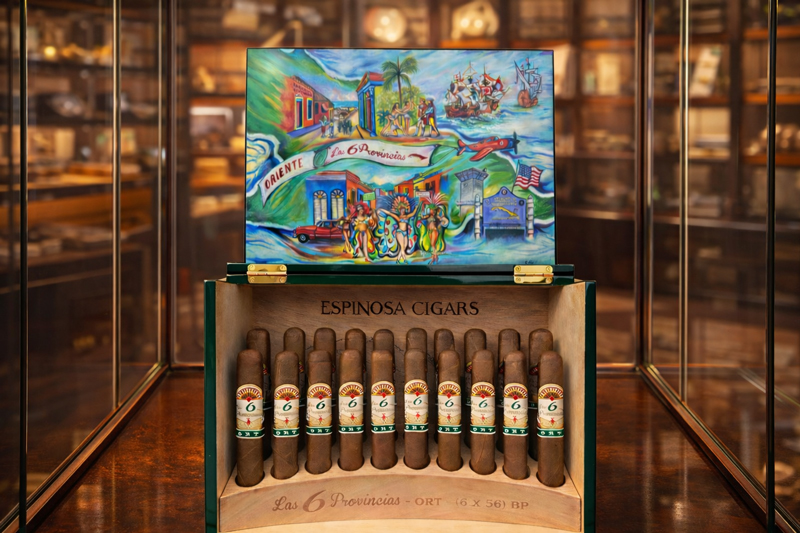
One of Espinosa’s most retailer-friendly practices is restraint. Unlike manufacturers who flood humidors with overlapping SKUs chasing micro-segments, the Espinosa portfolio maintains clear differentiation between lines. Each blend has distinct strength profiles, wrapper expressions and intended experiences, making it easier for retailers to merchandise confidently without extensive explanation.
Alfonso articulates the company’s blending philosophy with precision. “You can’t just create one blend and put different wrappers on it and call it something new,” he says. “Today’s cigar consumers are incredibly educated and attentive to what they’re smoking. They can tell when something hasn’t been thoughtfully developed; and doing that is not only bad form, it can damage a company’s reputation in the long run.”
This commitment to intentional development means each cigar needs its own identity, with every component working together to create a distinct experience. Even when using familiar tobaccos, the blending process starts from scratch rather than relying on formulas. The approach prioritizes quality over quantity, a harder discipline when retail accounts want new releases.
Espinosa’s selective approach extends to retail partnerships themselves. The company intentionally limits distribution, choosing partners carefully rather than pursuing universal availability. When new retailers inquire about carrying the brand, Espinosa encourages them to start with three to four facings of a single line, see how it performs, and build from there.
“We try to do the right thing,” he explained. “Crawl, then walk, then run.”
Consistency Over Innovation
While the cigar industry celebrates innovation and new releases, Espinosa recognizes that most smokers return to brands because they trust what they’ll get every time. Consistency and reliability form the foundation; innovation is the accent note, not the melody.
“Most cigar smokers come back to brands because they trust what they’re going to get every time they light up,” Alfonso observes. “At the same time, innovation is what keeps both the brand and the consumer experience from becoming stagnant.”
The company’s approach balances these competing demands by innovating without losing identity. New blends still need to feel connected to what Espinosa represents, meeting quality and flavor expectations that loyal customers have developed. The goal isn’t to shock smokers but to offer fresh experiences that feel familiar in craftsmanship and character.
This shows in the company’s handling of blend evolution. Alfonso emphasizes that while tobacco naturally changes year to year depending on weather and growing conditions, Espinosa hasn’t needed to make changes to core products over the years. Strong quality control and long-term relationships with growers help secure tobacco that stays true to each blend’s requirements.
If maintaining a blend became impossible, the company would discontinue it rather than quietly swap components. “That would be a disservice both to our company and to the consumers who trust us,” Alfonso states. “Maintaining that trust matters more than forcing a product to continue under a familiar label.”
The Guy Fieri Effect
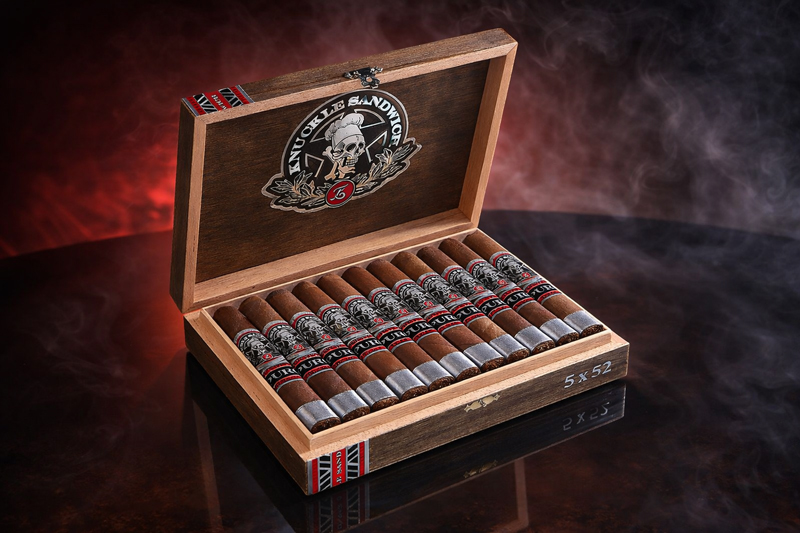
While this analysis intentionally sidesteps the usual celebrity collaboration narrative, the Knuckle Sandwich partnership with Guy Fieri illustrates Espinosa’s broader strategy. Rather than treating it as a licensing deal or quick cash grab, the company approached the collaboration with the same disciplined blending philosophy applied to all products.
From a business perspective, Alfonso notes, the partnership reinforced confidence in pushing bolder, more expressive blends while maintaining balance and craftsmanship. Now entering its fourth year, Knuckle Sandwich has demonstrated staying power, validating strong demand for fuller, more assertive profiles when executed properly.
More significantly for retail partners, Fieri’s active involvement as a genuine cigar smoker—attending trade shows, making in-store appearances, promoting through his media platforms—has expanded cigar visibility beyond traditional audiences.
The Middle-Market Challenge
Operating as a mid-sized manufacturer presents unique challenges. Espinosa can’t match the marketing budgets and mass distribution of major manufacturers, but no longer has the scrappy flexibility of a tiny boutique. The company competes by leaning into what it does well: relationships, presence and product consistency.
“We’ve chosen to climb the ladder step by step, focusing on being successful at each stage of our growth rather than trying to match the big companies move for move,” Espinosa explains. “Instead of worrying about what the largest manufacturers are doing, our focus stays on being the best among our peers and continuing to earn our place through hard work, relationships and consistent products.”
The strategy prioritizes depth over breadth.
Looking Forward
After more than a decade building Espinosa Cigars, Erik Espinosa maintains the same restless energy that launched the company. He jokes about retirement but acknowledges he doesn’t know when to quit. His son handles increasing business responsibilities, and the team continues expanding, but Espinosa himself remains actively involved.
The company continues developing new releases—another Warhead, another Chef’s Special, and projects not yet announced—but always within the disciplined framework that has sustained growth.
For retailers navigating an increasingly competitive market with limited humidor real estate, Espinosa Cigars offers a model worth studying. It’s a brand built on intentional friction rather than mass appeal, one that simplified its audience to strengthen its position.
—
For more information about Espinosa Cigars, visit espinosacigars.com.
– Photos courtesy of Espinosa Cigars. Story by Stephen A. Ross.
This story first appeared in PCA26 Attendee Guide. To receive a copy of this publication, you must be a current PCA member. Join or renew today at premiumcigars.org/membership.