
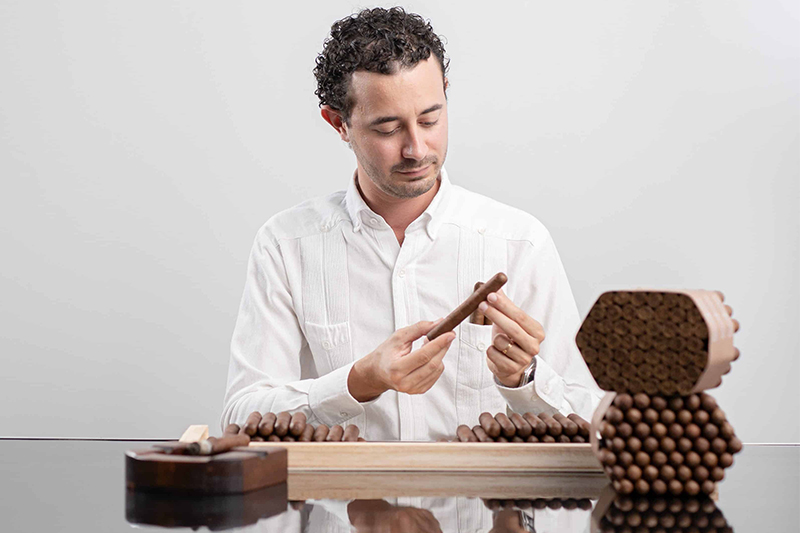
The name Kelner carries a lot of weight in the world of premium cigars. The Kelner family is synonymous with tobacco and with blending and working with some of the biggest names in the industry. In the 1950s, Klaas Pieter Kelner Sr. created a system of warehouses that allowed him to process tobacco in different locations across the Dominican Republic. Beause of this, he could provide improved service to his clients and process tobacco closer to the farms where tobacco was grown. His son, Hendrik “Henke” Kelner, extended the family’s legacy within the tobacco industry by focusing on the sourcing and blending of tobacco.
Now, Hendrik Kelner’s son Klaas is continuing the family’s legacy in tobacco as part of a third generation of Kelners, leaving a lasting impression on the tobacco industry.
Coming Up in the Industry
Klaas was born and raised in the cigar industry. One of his earliest memories is of his father, Hendrik Kelner, inviting friends and clients into their home for dinner and cigars. Klaas’s parents made a big effort to include him in anything work-related, laying the foundation at a very early age for him to understand and appreciate the inner workings of the premium tobacco industry. From dinners to visits with farms and factories, Klaas found himself part of the industry long before he began working in it as a young adult. When his school had a career day, it should be no surprise that Klaas dressed as a tobacco farmer and engineer, just like his father.
At age 17, Klaas began leading factory and farm tours alongside his father. During these tours and seminars, Klaas would find himself in front of a captive audience with his father, who often handed him a microphone to talk about cigars, tobacco or a process seen within the factory. Klaas fondly refers to this period of his career as “community service” since no paycheck was involved. Despite having no monetary incentive, Klaas embraced the opportunity that allowed him to learn more about the industry his parents and family had long worked in and that he, shortly, would choose to work in as well.
“After college, I worked in the farms, fermentation and sorting, learning the importance of vertical integration. I was also sent to work in the market and learn about sales and marketing,” he explains. “I ended up working primarily in a marketing position, which I loved because it gave me a clear connection to the cigar aficionados.”
Interacting with cigar consumers provided Klaas with valuable insight into what made certain brands stand out in the humidor and what consumers valued most in a cigar. It did not take Klaas long to realize how much he enjoyed creating cigars.
“The purchasing process, buying of tobacco, being able to get all the ingredients to create a unique premium product—this is what I’ve fallen the most in love with,” Klaas shares. “If it weren’t for my time in the market, I would be making cigars for my personal taste. Instead, I am able to make different cigars with a variety of profiles that any aficionado can enjoy.”
Klaas was raised to be a blender. Even as a young child, when he sat in the seminars led by his father, he learned how to analyze and taste different tobaccos. Throughout his early years in the industry, Klaas held a number of different jobs. Still, it was always the blending that resonated the most with him. It became clear to Klaas that a job in blending would not come easy; he realized that the only way he could pursue blending was to start his own company.
In April of 2023, Klaas announced the opening of Kelner Cigars, S.A.S., his own cigar factory in Santiago de los Caballeros, Dominican Republic.
Building a Factory
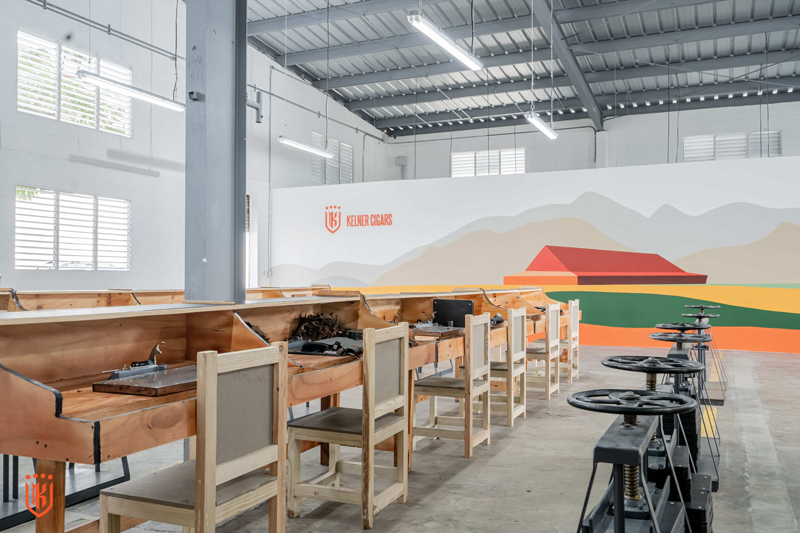
Starting a factory is an extreme step in fulfilling the dream of becoming a blender. For Klaas, it was necessary and worth taking on. The most challenging part of starting a factory has been finding the right rollers and employees.
“I am very strict in quality control, and I also demand my rollers make cigars in a particular way: finishing the head of the cigar with the same leaf, in a “caracol” cut. Being able to train rollers in this fashion, or find rollers that still do it or are willing to learn, has been the most challenging thing.”
Much like his father, Klaas is more than willing to teach others his techniques. He also understands that a factory’s success depends on those working within it. Klaas works on having a close connection with each employee, knowing their names, keeping up with their families, and knowing when someone is sick or when they are dealing with a personal matter. He learned this from watching his father work and how he managed his relationships with those who worked in his factory. In addition to paying employees well, Hendrik Kelner taught his son the importance of treating his employees with respect.
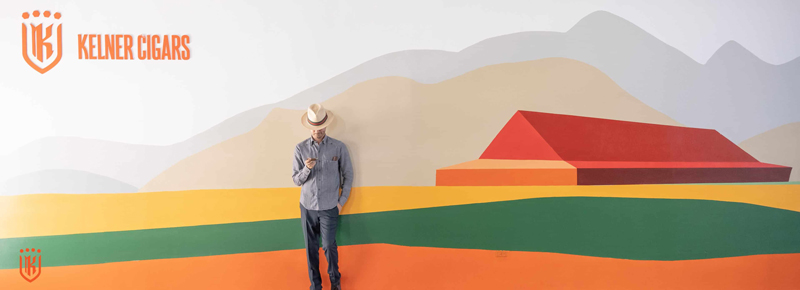
“I work with one word and that’s loyalty. As long as you’re loyal to me and never break my trust, I will always reciprocate. That’s how we work. My employees know that they can always count on me,” Klaas explains. “That’s a tradition I’ve kept from my dad; be loyal and treat them [workers] with respect.”
That theme of loyalty and trust also extends to the factory’s clients. One decision Klaas made early on was that when it came to buying tobacco, he wanted his factory to be known for having the highest quality tobacco on hand for blending. This oftentimes means Klaas is buying some of the most expensive tobaccos. He also has a rule that all cigars rolled at his factory must be aged for at least three months before they are packaged and shipped.
“There are certain processes that cannot be avoided,” he explains. “That’s something I’m not flexible on. There are key things happening to a cigar’s composition during that aging time.”
Much of Klaas’s day in the factory is spent managing these critical areas. The day begins with him getting a report on the day’s attendance. This report is the first contact Klaas has with his factory. If someone is missing, why? Knowing what his employees are doing is key because someone’s absence could mean that he and others will need to pivot to keep the production process moving forward.
Once he’s in the factory and attendance has been taken and addressed, he grabs a cigar from the production line and smokes it. Checking the quality of what’s in production, and even what didn’t pass quality standards, helps ensure that his factory is outputting a good quality product. After checking in with the packaging department, he checks in with clients and makes sure the factory’s inventory of tobacco is at a healthy level. (His father constantly advises him to buy more tobacco.) The day ends around five in the afternoon when he goes home to spend ample time with his family.
Focusing on the Details
Klaas is a fan of processes. You can tell by how excited he gets when speaking about how the factory operates and how he develops a new blend. The factory was developed to fulfill his wish of blending cigars. He is in a position where he can be selective with what he works on, so he chooses his projects carefully. Some of his factory’s clients are longtime retailer friends who want to develop a cigar for their store. Others are brand owners looking for a new cigar to distribute.
“For anybody that works with me, I put all the attention and love into creating their cigars,” Klaas explains. “I want retailers to know that any cigar that comes out of my factory is a cigar that is made with the utmost care and attention to detail. I offer a tailored experience for every single one of them.”
Kelner Cigars is still a young factory, and for that reason, Klaas is giving his full attention to making it better every day. There’s no Klaas Kelner-branded cigar for now because his sole focus is laying the foundation for a strong factory. This means giving his current clients as much attention as they need rather than being distracted by creating and maintaining his own brand. This factory is part of the Kelner family’s story and Klaas’s legacy.
“There are barriers of entry into this industry that are not easy to overcome. There are fewer people farming nowadays, premium tobacco is scarce, and anti-tobacco regulations are on the rise. I want to be able to look past all these restrictions and all the hardships that come with starting a factory. These challenges can be overcome. I want to keep the traditions of the premium cigar culture alive.”

Klaas may be following in his father’s footsteps, but he’s forging his own path in the premium cigar industry. Klaas hopes his daughter, part of the next generation, learns to love the tobacco industry as he does and finds her own place within it. To those who are part of the next generation of the industry, Klaas has this advice to pass along: Continue to blend, make high-quality cigars, and never cut corners.
– Photography courtesy of Klaas Kelner. Story by Antoine Reid, content director at Premium Cigar Association (PCA). You can reach him at antoine@premiumcigars.org.
This story first appeared in PCA The Magazine, Volume 1, 2025. To receive a copy of this magazine, you must be a current PCA member. Join or renew today at premiumcigars.org/membership.