
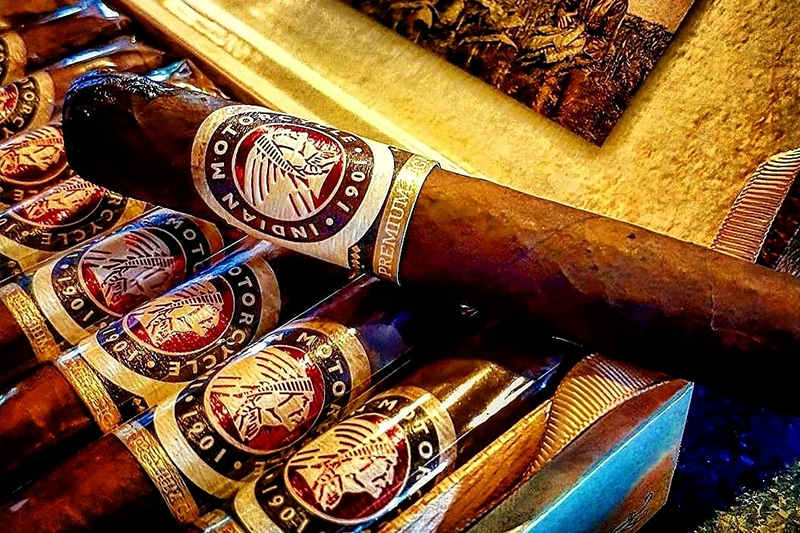
There is a moment in every Phil Zanghi story where things should have gone wrong and didn’t, or went wrong and he found a way through anyway. After nearly 30 years in the premium cigar business, he has accumulated enough of those moments to fill a book—which, as it happens, he is currently writing from his home in the Dominican Republic. The latest chapter involves a box maker whose cousin’s father died at exactly the wrong time, 500 limited-edition releases tied to one of the most iconic brand names in American history, and a trade show debut that happened with no boxes at all.
“It’s Murphy’s Law,” he says, laughing. “The guy making the boxes didn’t have them done in time for the show. So I just brought the cigars as they were and gave them out to a bunch of people. And everyone seemed to love it.”
An iron horse and a cigar band
The story of Phil Zanghi and Indian Motorcycle begins where so many great American stories do—in a garage. As a high school senior in Dana Point, California, Zanghi was enrolled in a retail trades class and needed a project. A neighbor named Nick DeLeon happened to own the trademark to Indian Motorcycle, America’s first motorcycle company, which had ceased production in 1953. Zanghi asked if he could use the logo on T-shirts. DeLeon said yes. The T-shirt business took off immediately, with Zanghi selling them out of an Indian-red panel van on weekends. DeLeon, impressed, eventually handed over half the trademark for a dollar. By the time Zanghi graduated from high school, he was the president of Indian Motorcycle.
The cigar idea came not long after, born in a moment of late-night clarity. Lying in bed one evening, Zanghi looked at the Indian headdress logo next to a mirror and saw it inverted in the reflection.
“I said, man, that looks like a cigar band,” he recalls. “My dad was always a cigar guy. And I just ended up going in the phone book and finding a tobacco company.”
That call landed him at UST in Connecticut, where he dealt with Raymond Guys, then UST’s president of its premium cigar division. Guys helped Zanghi launch his first cigars—The Warrior, The Chief, The Tepee, The Boxer, and The Arrow, all named after historic Indian Motorcycle models—just as the cigar boom was gathering steam, and Indian Tabac was born. Unfortunately, his father emptied the company’s bank accounts and disappeared. Zanghi spent two years moving furniture in North Carolina, paid off every debt, and eventually moved to Honduras with $2,800 and not a word of Spanish.
The long road back
In Honduras, Zanghi worked mightily to re-establish Indian Tabac. The Cigar Boom years saw him struggling to get enough tobacco to fulfill the orders, which he estimates amounted to 10,000 boxes per month. He added a partner in Rocky Patel, whom he met at the Grand Havana Room in Los Angeles, and the company seemed to be thriving. However, by the late 1990s, Zanghi and Patel agreed to part ways. At about the same time, Zanghi met Danny Sinclair, the owner of Durfort Holdings, who became instrumental in establishing Blunt Wrap USA. Zanghi was almost constantly on the move between Louisiana, Honduras and the Dominican Republic. He set up factories, processes and distribution deals for the company, but eventually the urge to return to the premium cigar business proved too strong to ignore. In 2012, he established Debonaire House Cigars, with the name inspired by Guys who always impressed Zanghi with his debonair demeanor.
Choosing the Reyes family in the Dominican Republic to make the cigars, Zanghi built the brand around a proprietary process he calls tobacco alchemy. Having helped Durfort Holdings establish its pipe tobacco business a few years earlier, Zanghi adopted similar techniques for using steam and distilled water to strip impurities from fermented leaf and isolate the tobacco’s essential oils. Debonaire Cigars was as much a philosophy as a product line.
“Debonaire is an ideal—it’s a way of life,” he explains. “The cigar is a catalyst to conversation. It’s 45 minutes of sitting down and talking to other people, putting your phone down and enjoying people.”
Two years later, Polaris Industries, which had purchased Indian Motorcycle in 2011 and revived production, came calling for a cigar partner. They knew Zanghi’s history, and Indian Motorcycle cigars re-launched at the 2015 IPCPR show in New Orleans. Reunited with his old brand, Zanghi experienced his most profitable trade show yet, and a little more than a decade later the returns have kept coming.
Two wheels, one smoke
Ask Zanghi how Indian Motorcycle and premium cigars connect and he doesn’t hesitate. To him, they are the same experience in different forms.
“You look at your cigar and you smell the foot, you toast the foot,” he explains. “It’s the same thing as getting on your motorcycle. You check it, you put your jacket on, you make sure your boots are tight. You put the key on, you start it up, you warm it up. Then you light it and give it gas. And then you take off. Now you’re riding. Now you’re smoking.”
The Indian Motorcycle name, he argues, carries a weight few non-cigar brands could match—present since 1901, survived wars and corporate collapses, in the hands of Steve McQueen and in the promotional materials of police departments worldwide. The brand’s new CEO, a veteran of Harley-Davidson who took over after Polaris recently sold the majority of its Indian shares to a California private equity group, is a cigar smoker himself. After receiving samples of the anniversary release, he texted Zanghi personally.
“He said, ‘Thank you—I gave these to my ride buddies and it’s a great product. How do we bring this together and scale this?’” Zanghi says. “I think finally, now, this might be something great to really get Indian Motorcycle cigars into the bloodstream of the brand.”
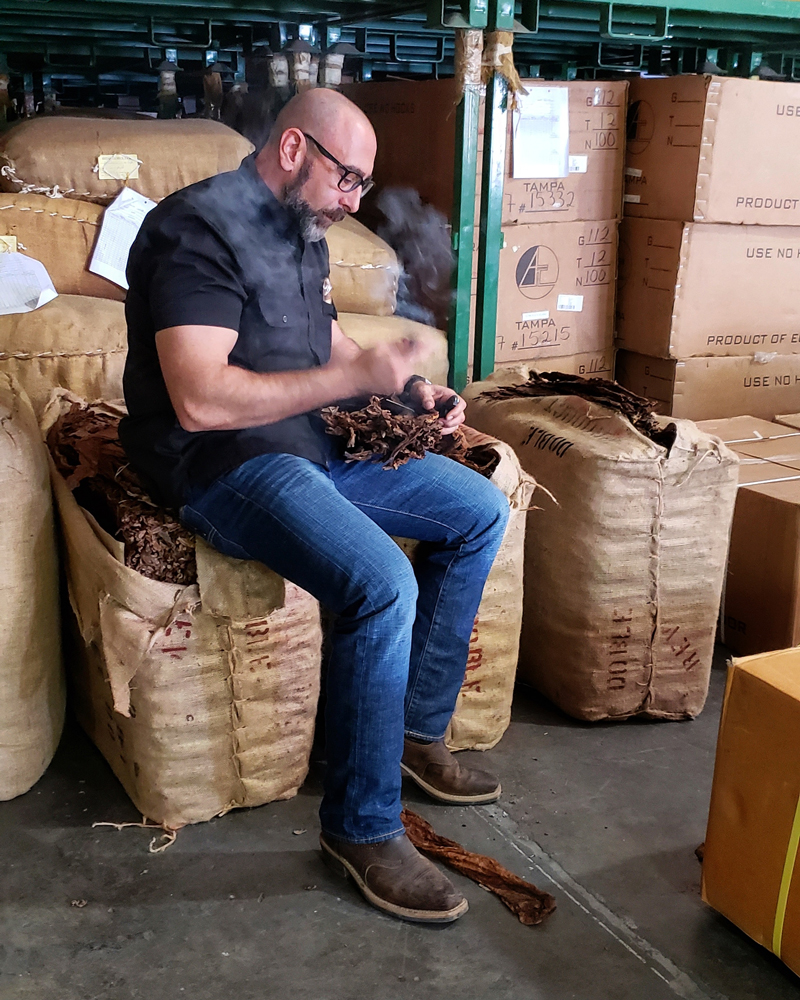
Zanghi’s hashtag of choice—#smokehistory—captures something essential about his vision. To him, the Indian Motorcycle cigar is not merely a licensed product. It is an extension of one of the most storied brands in American history. Indian Motorcycle produced six million bikes from 1901 to 1953, equipped police forces around the world, served in two world wars and put icons like Steve McQueen and Roy Rogers in the saddle. It is, Zanghi argues, as recognizable as Coca-Cola or Ford and carries meaning even for people who have never set foot in a cigar shop. Indeed, he believes so much in the brand that he is now focusing all his energy into it.
“Time spent smoking a cigar or riding a motorcycle cannot be subtracted from one’s life,” Zanghi says. “I don’t just make cigars. I make reasons for people to enjoy their lives.”
That may be the truest thing Phil Zanghi has ever said. After 30 years of proving it, there is very little reason to doubt him.
– Photos courtesy of Indian Motorcycle. Story by Stephen A. Ross.