
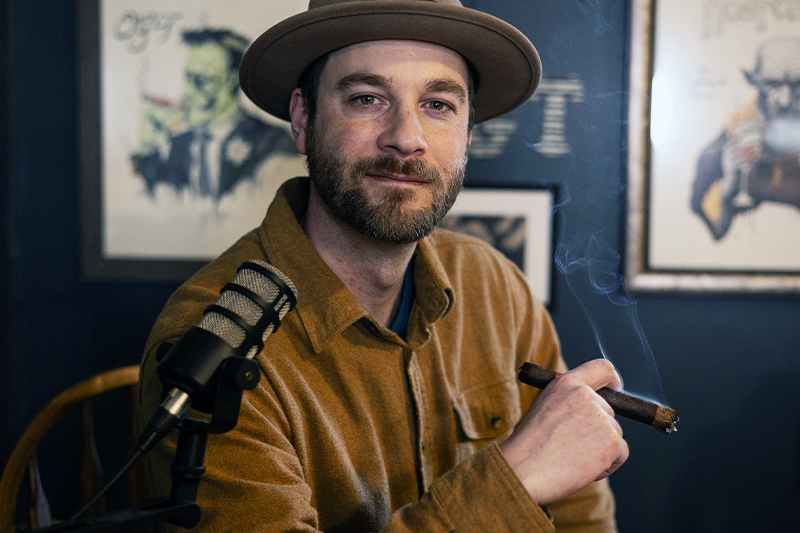
When Eric and Mallory Drazin opened Oak Glen Tobacconist in August 2019, they knew California wasn’t an easy place to run a cigar business. High excise taxes, strict licensing rules, anti-tobacco campaigns and limited flexibility for specialty retailers were already part of the deal. What they didn’t expect was how quickly regulatory pressure could move from challenging to destabilizing.
“I knew it was going to be hard,” says Eric. “I just didn’t expect things to change so fast that the whole model could stop making sense.”
The Drazins didn’t enter the cigar world with plans to scale or expand aggressively. After years working long hours as an artistic theater director, Eric used cigars as a way to slow down, to escape the rush of life. “I didn’t set out thinking I was going to open a cigar shop,” he says. “I just got really into the craft. The blending, the process, all of it. It kind of took over.”
Indeed, Mallory remembers the exact moment Eric’s passion became something more. “Bear in mind that in the years leading up to that point, Eric’s cigar hobby had blossomed from a tiny desk humidor to a six-foot cedar cabinet humidor, which I jokingly referred to as the ‘second wife’ since he was always checking her temp, humidity, and that everything was perfect. He also kept a scrupulous record of everything he had ever smoked, and an inventory of the humidor, spreadsheet-style.
“He had been working with my cousin’s family on a few events at their venue, and came home one day after one of them where it was suggested he open a cigar shop,” she says. “He told me about the exchange half-jokingly, and I turned to him, completely serious, and said he had to do it. I don’t think an opportunity to do something you love, and are obsessed with, comes up that often, so I just knew it was right.”
Oak Glen Tobacconist was born, and by the time they were up and running, they knew what they wanted to build—and what they didn’t. Oak Glen Tobacconist was designed as a small, education-focused shop centered on boutique cigars and real relationships, not volume sales or discounting. But that vision was tested almost immediately.
Just weeks after Oak Glen opened, California’s cigar excise tax jumped from 27.6 percent to more than 62 percent. “It felt like it happened overnight,” Eric says. “All of a sudden, every cigar cost more, and there wasn’t anything we could do about it.” For a brand-new business, the timing was brutal.
As California retailers can attest, the Golden State’s tobacco regulatory framework places significant administrative and financial burdens on small businesses. Early on, Oak Glen operated under a retail license that pushed tax collection and reporting responsibilities to distributors. That changed, however, when the Drazins sought to carry more boutique blends, like American Viking Cigars, a move that required Oak Glen to obtain a distributor license.
“That’s not a small thing in California,” Eric explains. “It’s expensive, it’s complicated, and now you’re responsible for everything—tax filings, compliance, reporting. There’s no room to mess up.”
Eric worked the system as best he could and acquired the distributor license, giving Oak Glen more flexibility in sourcing products, but also exposing the business to California’s vast regulatory structure, and to increased financial responsibility. Then the hits kept coming.
Five months after opening, Oak Glen shut down in-person operations during the COVID pandemic. Like many small retailers, Drazin adjusted quickly, offering curbside pickup and leaning heavily on social media to stay connected to customers, but with a unique twist.
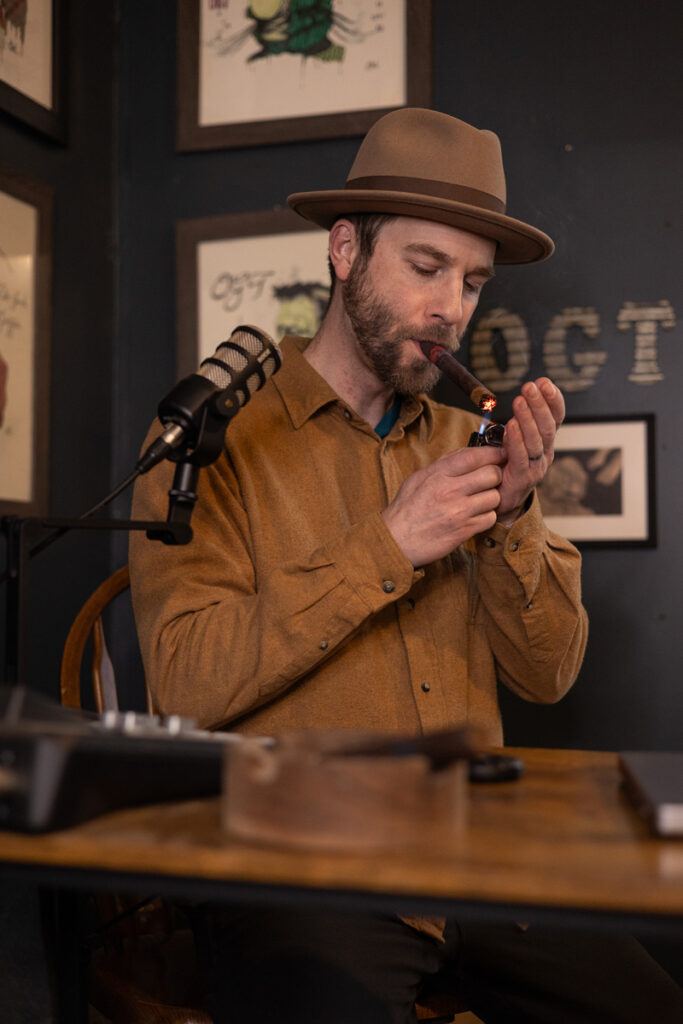
“We were just trying to keep people together,” Eric says. “So, every weekend we’d pick a cigar, people would grab it curbside, and then we’d smoke it together on Instagram Live.” Sometimes cigar blenders, like Foundation’s Nick Melillo, joined the conversation. The effort wasn’t about driving revenue. “We weren’t really making money doing it,” Eric admits. “It was about keeping the community alive.”
One of the keys to small business survival is adaptability, the flexibility of the business and the owner to pivot. As COVID dragged on and another shutdown was on the horizon, the Drazins considered their options. They knew they couldn’t survive another shutdown, and as they continued to build their online community and cultivate an online strategy it started to make more and more sense to take the next step to online sales. The transition, however, exposed another reality of the cigar business—operating digitally in a category with heavy advertising restrictions.
“There’s this idea that you put up a website and sales just start coming in,” he says. “That’s not how it works, especially in tobacco.” Instead, Oak Glen leaned into organic outreach: blogs, videos, long-form education and conversation-driven content designed to mirror the in-store experience. “We’ve always believed education is the long game,” Drazin says. “That didn’t change just because we were online. We wanted to reflect that in the content we produced.”
Out of those constraints came the OGT Cigar Society, a subscription-based community focused on limited and custom cigars, paired with shared discussion and education. “We were trying to recreate what happens in a good cigar shop,” Eric explains. “Everyone smoking the same thing, talking about it, learning together, just without being in the same room.”
The model worked. It provided steadier revenue and allowed Oak Glen to build deeper relationships with boutique manufacturers, many of whom collaborated on exclusive releases.
Over time, the Society became central to Oak Glen’s identity—and, unintentionally, its vulnerability. In late 2024, Drazin began paying closer attention to the enforcement of California’s Unflavored Tobacco List (UTL). “At first, I didn’t think it would play out the way people were saying,” he recalls. “But the more I looked into it, the more concerned I got.”
The UTL requires manufacturers to navigate a slew of draconian measures and expenses to get their products on an approved list—a process that particularly affects smaller brands. Boutique cigar production often relies on small batches and limited runs, sometimes planned with little lead time. “Our whole model depends on limited cigars,” says Eric. “You can’t say to a small manufacturer, ‘You need to get on this list now so we can maybe sell this cigar later.’ That’s just not how they operate.”
As enforcement tightened, some manufacturers began pulling out of California altogether. “We started losing access to brands,” he says. “And once that happens, the membership model really starts to break down.” At that point, the path forward became clearer. “I honestly didn’t see how our model would survive in California,” he says. “Not the way we built it.”
Oak Glen faced a choice of either fundamentally changing what it had built or leaving the state. In 2025, the Drazins chose to relocate operations to North Carolina.
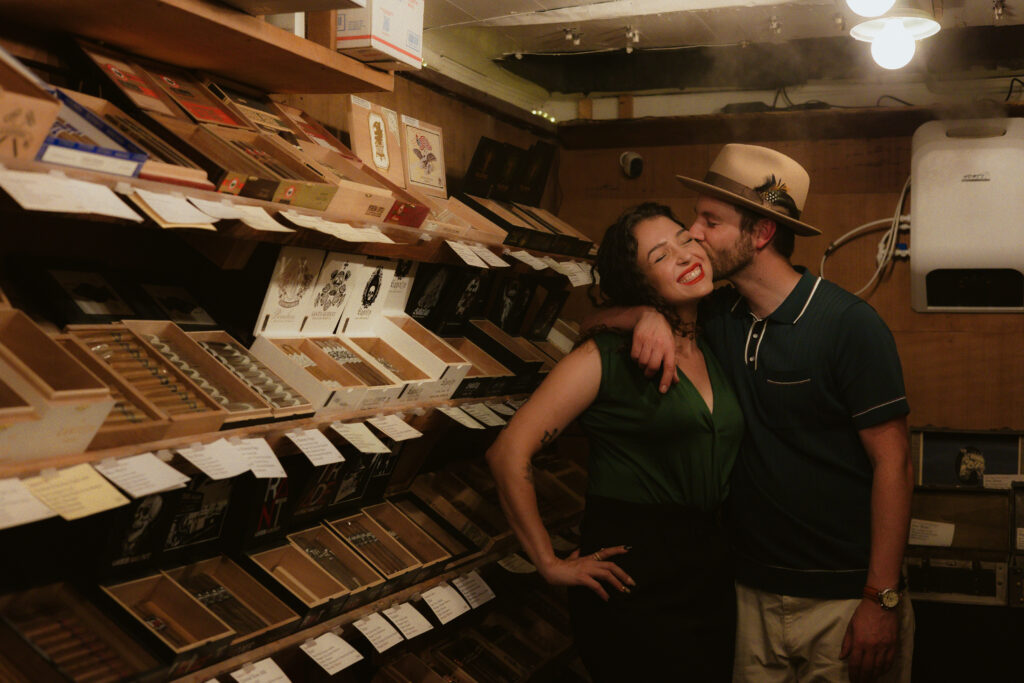
“In many ways, we were uniquely positioned to make the move,” says Mallory. “Because of the legal precariousness of cigars in California, we had always discussed our potential backup vision. We had agreed to focus much of our effort on growing the online aspect of our shop, so if the necessity to operate just that portion arose, we’d be prepared. The hardest part was leaving behind our amazing in-person community in Oak Glen, and the people who were such an amazing blessing to Eric and me, and continue to be so, across the country. When we heard the news about UTL, there was a period of shock and sadness, but it also felt a little bit like the ‘ready, set, go’ we’d been half-anticipating.”
Now operating from Angier, North Carolina, Oak Glen continues to serve its membership online, with plans for a future brick-and-mortar location near Raleigh. The move, Eric says, wasn’t about avoiding regulation altogether. “This wasn’t about looking for an easier road. We just needed a system where a small business can actually plan and not feel like it’s constantly reacting.”
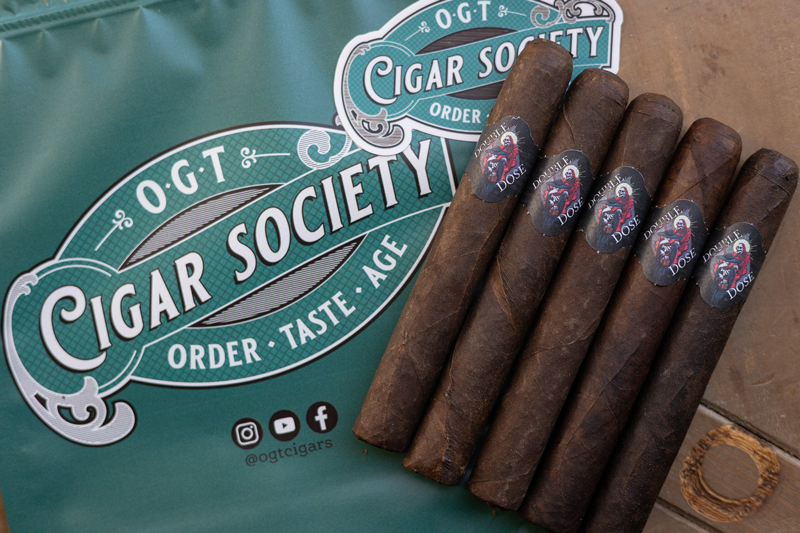
Eric and Mallory feel they can now get back to Oak Glen Tobacconist’s core goals: creating community, discovering new blends, expanding their educational outreach and celebrating the artistry and craftsmanship of premium cigars. And they finally see a more stable and hopeful future.
“I can’t wait to grow our local community, expand to a new brick-and-mortar, and continue to bring our customers (local and online) incredible cigar experiences,” says Mallory. “I hope that everyone who walks through our doors feels welcome, and that we get to continue to shine the spotlight on these amazing cigar brands and the people who create them.”
– Photos by Mallory Drazin. Story by Greg Girard.
This story first appeared in PCA The Magazine, Volume 1, 2026. To receive a copy of this magazine, you must be a current PCA member. Join or renew today at premiumcigars.org/membership.