
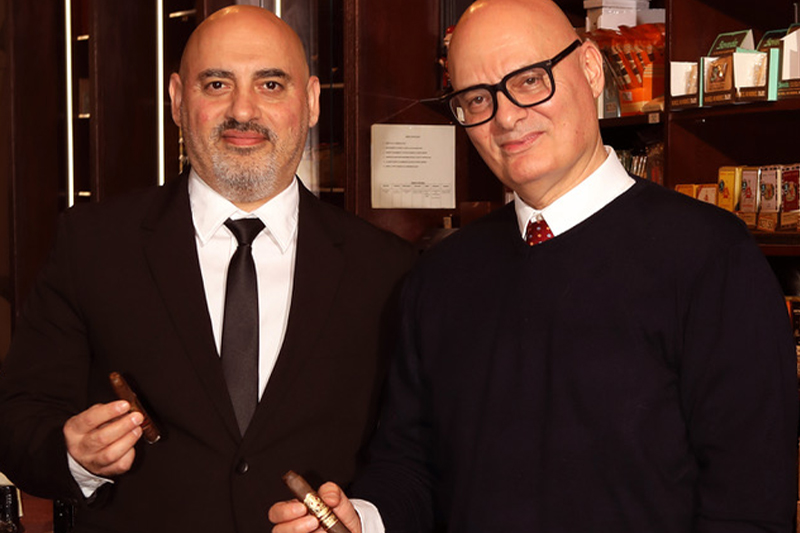
It’s a common dream among many premium cigar smokers—to start their very own brand. Few, however, begin with the kind of firsthand knowledge that comes from decades behind a retail counter. For brothers Billy and Gus Fakih—the duo behind Artesano del Tobacco—years of listening, learning, and serving cigar smokers shaped not just their business instincts but their philosophy on what makes a cigar truly great. From running one of New York City’s most celebrated lounges, the New York Cigar Inn, to now crafting boutique blends with legendary cigarmaker A.J. Fernandez, their journey represents the rare transition from retail to artistry—from understanding what customers want to creating cigars that define that experience.
From Retail Floor to the Factory Door
Before they were brand owners, Billy and Gus were students of the cigar business, learning the rhythm of what consumers reached for and why. The brothers built their reputation as tobacconists through the Cigar Inn, a fixture of Manhattan’s Upper East Side known for its hospitality and deep humidor selection.
“We studied the market in a very rigorous way,” Gus recalls. “Every day we analyzed what people were smoking, what blends moved, what didn’t, and why. You don’t learn that in a book—only from standing behind the counter.”
This hands-on learning experience shaped their vision for what would later become Artesano del Tobacco. It was there, amid the steady hum of conversation and the aroma of open boxes, that the brothers began to understand not just tobacco, but the people who smoked it. They didn’t just sell cigars, they built relationships.
“There’s no school that can teach you what being a retailer does,” Billy explains. “We were on the front lines with every kind of cigar smoker, and we learned how passion and palate come together.”
Their retail roots became a foundation for their new cigar business, a connection to the end consumer that continues to guide their decisions as manufacturers today.
An Industry’s Evolution
Having run the Cigar Inn through the height of the cigar boom and beyond, the brothers saw the culture of cigar smoking evolve firsthand.
“Back then, people smoked cigars to look cool,” Gus says with a grin. “Today’s consumer is educated. They know where their tobacco comes from, how it’s blended, and what regions create which flavors.”
The rise of cigar media, reviews and online communities changed everything. But for the Fakih brothers, these shifts were opportunities, not obstacles. They learned that consumer palates changed every few years; that education drove loyalty; and that authenticity mattered more than marketing. “Your palate changes every five years,” Billy adds. “What you loved before might not satisfy you later. You have to grow with your smoker.”
When the Fakih brothers eventually sold the Cigar Inn to Casa de Montecristo in 2015, the brothers didn’t see it as an end to their time in the industry but an evolution. They knew that they wanted to stay in the cigar world, only this time as creators rather than retailers. Their transition from tobacconists to brand owners began with a familiar name: A.J. Fernandez.
“We helped A.J. when he was just starting out,” Gus says. “He never forgot that. Years later, he told us, ‘You helped me when I was nobody. Now I’ll help you.’”
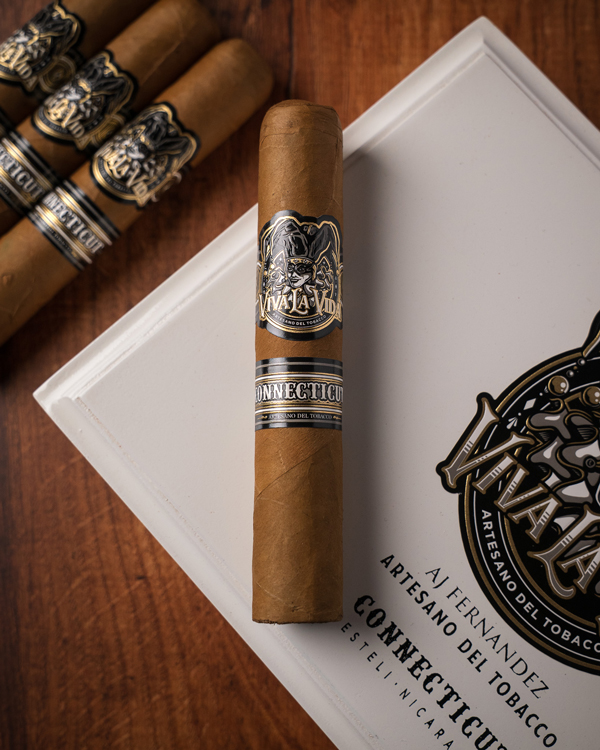
That gesture marked the beginning of Artesano del Tobacco and its flagship release, Viva La Vida. Five years of meticulous development went into the blend, a project born from patience and trust.
“You can’t rush tobacco,” Billy explains. “It tells you when it’s ready. Our job is to listen.”
Blending Stories with Cigars
The name Artesano del Tobacco translates to “artists of tobacco,” a very intentional and personal choice for the brothers as they embarked on their new business journey. The brothers view cigarmaking as an art form, one that requires skill, creativity and respect for the process.
“Every person who touches the cigar, from the farmer to the roller, is an artist,” Gus says. “That’s why we chose the name. This is not a business built on volume; it’s built on craftsmanship.”
Their process is as unconventional as it is intentional. Every project begins not with a blend, but with a story.
“We start with the imagery,” Billy says. “The concept, the emotion, what we want the cigar to say. Then we build the blend around that.”
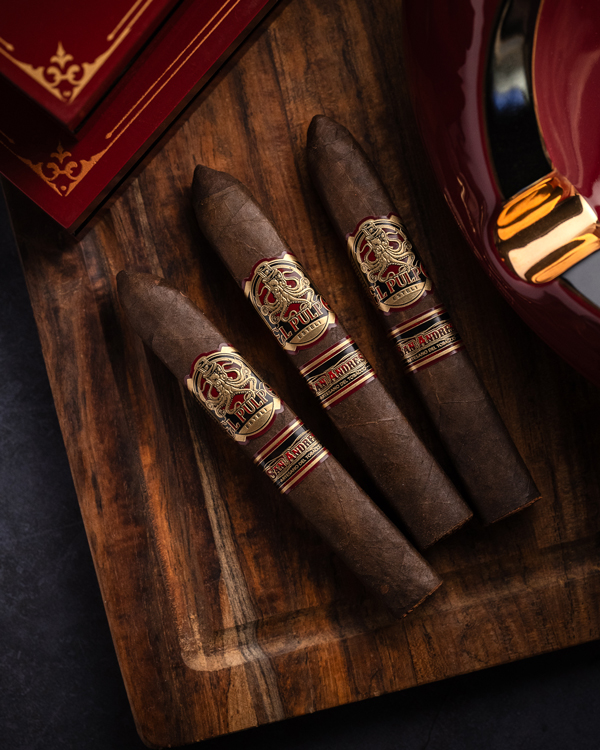
That storytelling-first approach is evident in their lines. Viva La Vida features the now-iconic jester, a symbol of joy and perseverance. El Pulpo (The Octopus) represents adaptability and complexity. Each design reflects both art and identity, combining visual storytelling with flavor composition.
Working alongside A.J. Fernandez in Estelí, Nicaragua, the brothers deepened their appreciation for the technical side of tobacco.
“A.J. is a genius,” Billy says. “He doesn’t just work with seeds, he works with soil. He knows how to manipulate it so that in two years, it produces exactly the flavor he envisioned.”
Their collaborations focus on patience, balance and respect for time. “If you rush to meet a deadline,” Gus adds, “you lose the soul of the tobacco.”
That philosophy extends to their testing process. Before any release, cigars go through what they call “The 500 Club”—a select group of retailers and smokers who provide honest feedback.
“We don’t blend for ourselves,” Gus explains. “We listen to what the market tells us. That’s something we learned in retail: Your ego doesn’t decide success. The consumer does.”
Artesano del Tobacco is not a company driven by volume or urgency. The brothers are content releasing cigars only when the blend and the story behind it feel complete.
“Every project takes years,” Billy says. “By the time we’re 100, we might have four or five lines, and that’s fine. We’d rather have five unforgettable cigars than fifty forgettable ones.”
Their commitment to quality over quantity comes directly from their time managing shelf space as retailers. They know the challenge retailers face when every new brand competes for humidor real estate. “As former retailers, we respect that space,” Gus explains. “If our cigars earn a spot, it’s because they deserve to be there.”
Their latest release, Viva La Vida Connecticut, continues that philosophy. Responding to consumer demand for a milder, more nuanced smoke, the brothers worked with A.J. to create a Connecticut that balances smoothness with complexity.
“The wrapper is the pitcher, the binder is the catcher, and the fillers are your fielders,” Gus says, using one of his favorite analogies. “Every leaf has a role. You need all of them to win the game.”
Though now brand owners, Billy and Gus never forgot where they came from—retail. They visit shops regularly, sit with customers, and talk directly with retailers about what sells and why. Their insight helps bridge the gap between the factory and the humidor.
“Our success is tied to the people who carry our cigars,” Billy says. “Retailers supported us when we were one of them. Now, it’s our turn to support them, with cigars that move, stories that inspire and partnerships that last.”
That shared mindset makes Artesano del Tobacco a brand built not just on blends, but on relationships—the same relationships that sustained the New York Cigar Inn decades ago.
The Art of Giving Back
In conversation, it’s clear that gratitude drives everything the Fakih brothers do. Their humility, shaped by decades of working face-to-face with customers, is part of what sets them apart in a crowded market.
“We owe everything to the people who smoke our cigars and the retailers who believe in us,” Gus says. “Every cigar we make carries that gratitude.”
For Billy and Gus, Artesano del Tobacco isn’t about chasing trends or scaling fast. It’s about creating cigars that connect—products that tell a story of patience, passion and perseverance. Their transition from retailers to cigarmakers has come full circle. The same curiosity that once guided their humidor selections now fuels their creativity in blending rooms.
In every puff of Viva La Vida or El Pulpo, there’s more than flavor. There’s a philosophy, that cigars, like people, are meant to be experienced, not treated casually.
As Billy puts it: “We’re not just making cigars. We’re creating moments, the kind we used to witness every day across the counter.”
And that’s what makes Artesano del Tobacco more than a brand. It’s a bridge between the retailer and the maker—between passion and purpose—hand-rolled into every cigar they create. You can learn more about Artesano del Tobacco at artesanodeltobacco.com.
– Photos courtesy of Artesano del Tobacco. Story by Antoine Reid, content director at Premium Cigar Association (PCA). You can reach him at antoine@premiumcigars.org.
This story first appeared in PCA The Magazine, Volume 1, 2026. To receive a copy of this magazine, you must be a current PCA member. Join or renew today.